Integrated Vibration Controller
A self-contained unit combining actuator drive, precision motion sensing, and wireless control for active vibration damping and cancellation.
Problem
Every structure has vibration it must reject — a payload to hold steady, a platform to keep quiet, a mechanism to protect. Passive isolators and tuned dampers work only for a fixed disturbance at a known frequency, and buy low-frequency performance with mass a lightweight system can't spare. Active vibration control trades that mass for actuation and control: it handles modal, tonal, and broadband disturbances alike, tracks disturbances that shift over time, and cancels rather than merely dissipates — reaching attenuation, and serving mass-constrained systems, that passive treatments can't.
Approach
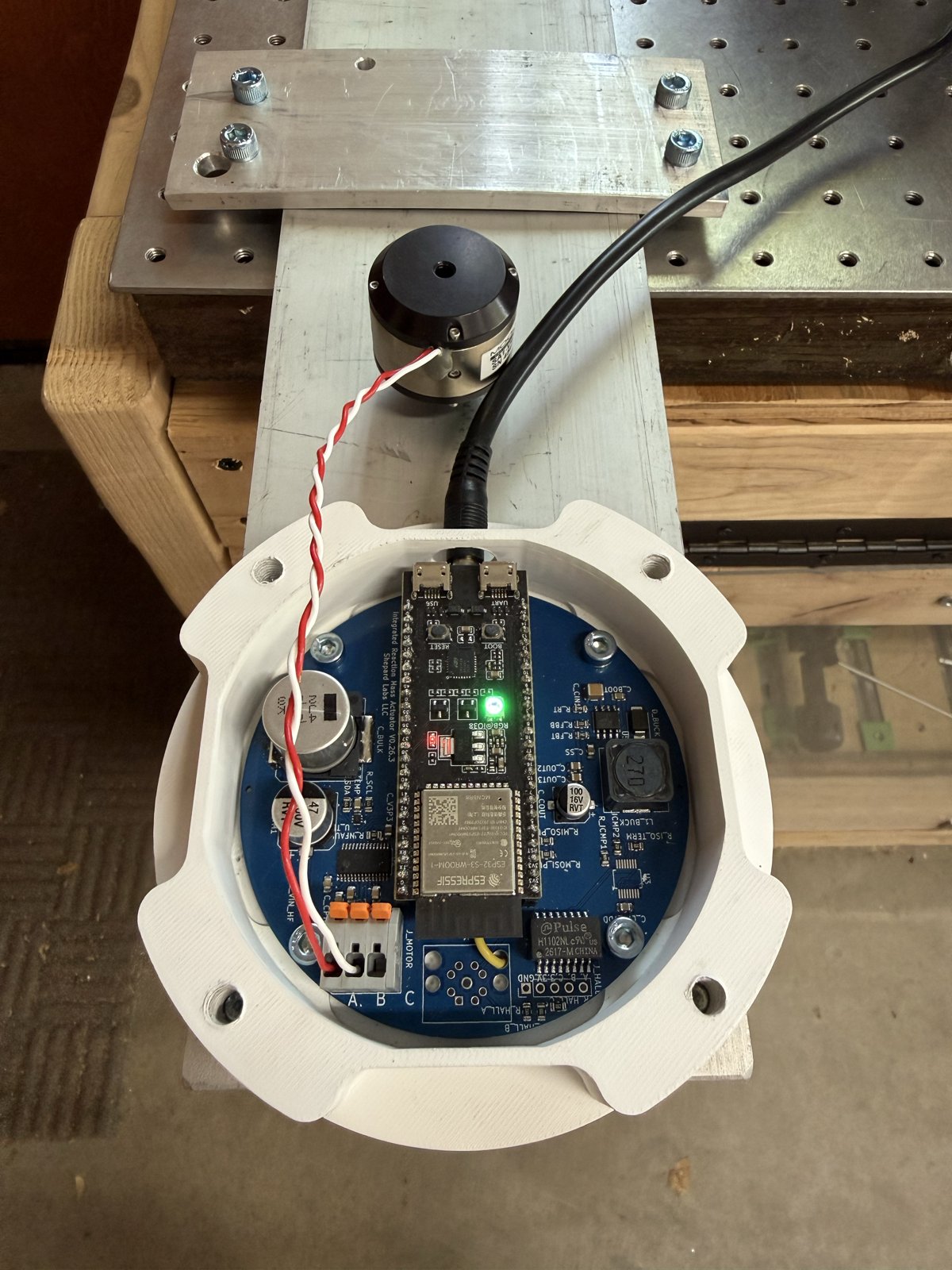
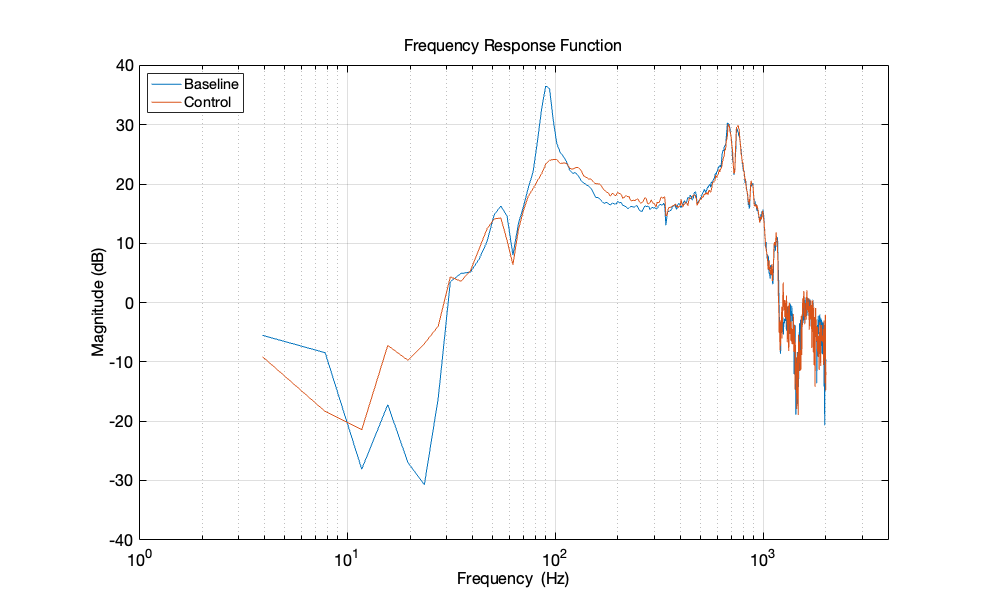
The controller integrates the complete active-control chain — motion sensing, real-time control, and actuator drive — onto one compact board built for field use. It drives a reaction mass to counter vibration at the protected structure, tuned to the dominant vibration modes of a given installation. Setup, monitoring, and firmware updates run through a built-in wireless dashboard, so a unit can be tuned and observed in place without additional test equipment.
Status
TRL 6 / MRL 5 — prototype validated in a relevant environment.
Active vibration systems have been used on:
- semiconductor and optical equipment for modal damping of ground-induced vibrations
- manufacturing equipment for modal damping to reduce tool chatter
- aircraft for tracking propeller disturbances
- telescopes for damping acoustic disturbances